

Written by Khensani Mohlatlole
Perhaps from severe middle child syndrome, I’ve always had an affinity for other people’s trash and finding new ways to put my own twist on things other people are done with. My sister’s hand-me-downs have been a gateway drug into the world of fashion upcycling, for which I hope to be one of the most prolific dealers.

To be fair, it hasn’t been a straight line from second-hand clothes to creative repair for me. In between that has been an ongoing focus on Southern African fashion history and indigenous design knowledge, where I’ve been fortunate to learn about the people and planet-first design thinking behind various crafts, textiles and dress practices from the continent. Now, I host (mostly) monthly workshops sharing embroidery, beading, and upcycling with my community, grounded in South African heritage and culture. I work as a textile artist and fashion historian, exploring collaborative approaches to knowledge production and how ancestral teachings can build a better, more sustainable future for us all.
Freedom Day (27 April) happened to fall right towards the end of Fashion Revolution Week this year, making it a great day to partner with Sealand on a DIY upcycling workshop. Beginning on Earth Day every year, Fashion Revolution Week is a global initiative aimed at bringing awareness to the ethical and environmental impacts of the fashion industry, seeking justice from mega corporations and legislative systems, while also reminding people of the immeasurable power of collective action. Concluding on the anniversary of the Rana Plaza disaster, it shows us that while our individual actions may seem small, they come together to make fundamental change.

And that’s what we wanted to focus on for our workshop, showing people actionable ways to incorporate more sustainable and conscious practices in their life and looking at sustainability not as a sacrifice but a chance for connection, agency and community.
We’ve been trained by decades of fast fashion, disposable clothing and overproduction to forget that sustainability is actually the norm. Across the world, our ancestors understood waste as a design flaw, having created a multitude of innovative solutions to honour the planet, materials and labour by ensuring nothing went to waste.
That’s how most of us have rag rugs, kitchen drawers stuffed with plastic bags, orange sacks repurposed into cleaning products, and so on. I’ve long admired Sealand’s ability to continue this tradition in a modern context, and we were able to come full circle on the day of our workshop by upcycling their upcycled and recycled materials.

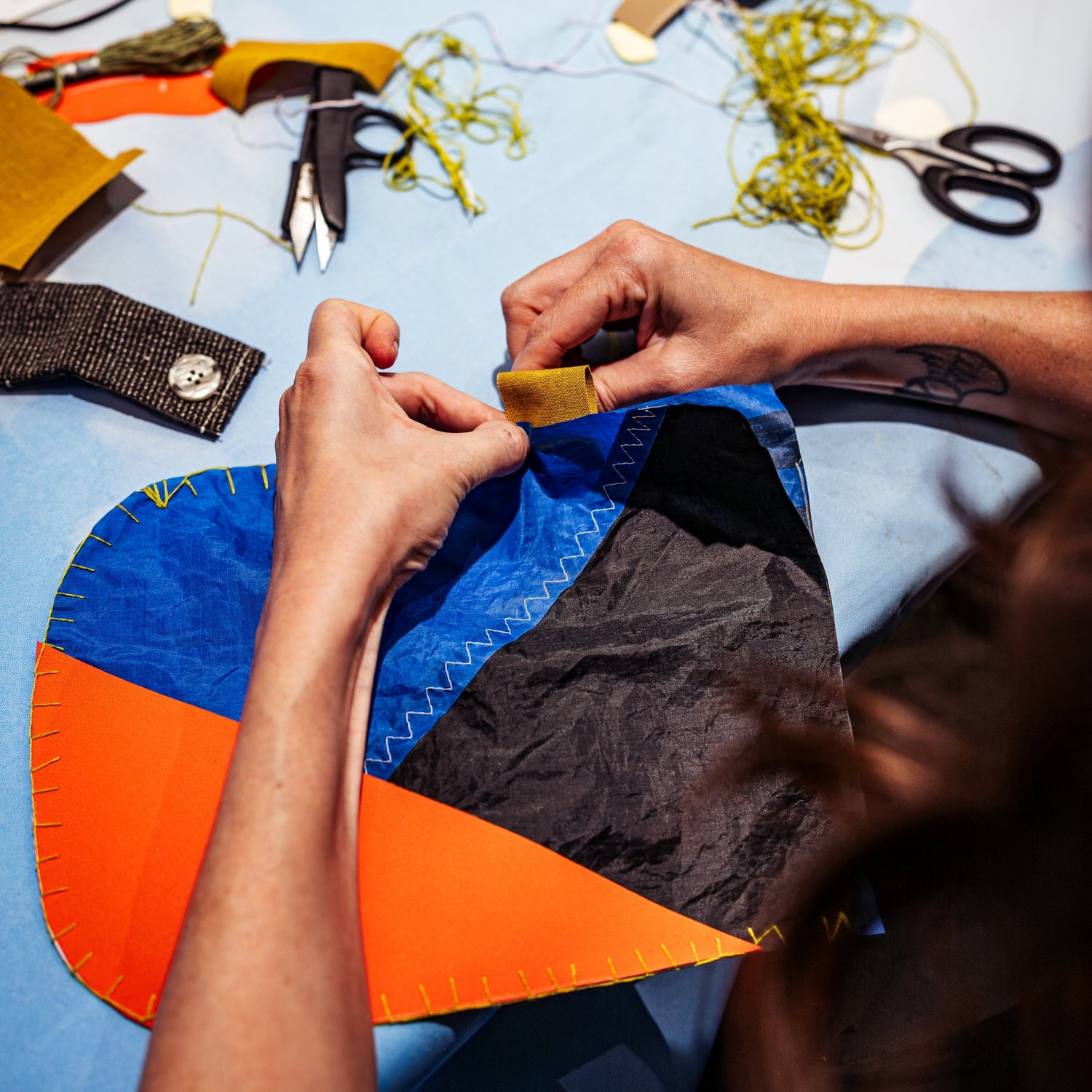
On the day, our guests were tasked to design and create their own mending kit. A portable bag in which they could store needles, pins, thread, buttons and whatever else they’d need to be able to mend their clothing and accessories on the go. Utilising offcuts and scraps provided by Sealand, everyone was given free rein to make their desired kit, aided by hands-on guidance in hand stitching, embroidery and basic mending skills. Everyone came up with unique solutions like hidden pockets, sashiko stitches, pockets shaped like decorative flowers, and bags that could be suspended from their Sealand gear.
Recycling and upcycling are two very similar-sounding terms, and it’s quite easy to get them confused. Recycling primarily refers to the process of breaking down products into raw materials and then reusing them. In fashion, this can be melting down plastic water bottles to weave the resulting fibres into polyester cloth or shredding existing cotton or polyester clothing into yarn that can be blended into new fabric. Unfortunately, recycling has a few limitations, like being very cost-intensive and out of reach for the average person who doesn’t own an industrial plant.

Upcycling, by contrast, is incredibly accessible. Like recycling, upcycling is about taking waste, damaged or old items and turning them into something new, but it’s more a creative practice than it is industrial, and it often prioritises retaining or upgrading the value of the original material. For example, this can be turning an old leather jacket into a handbag, crocheting with yarn created from ripped t-shirts, or using patchwork and appliqué to turn holes and tears into art projects. Anyone anywhere can begin upcycling as long as they have a willingness to learn new skills and flex their creative muscles. It’s accessible, inexpensive and empowering.
It’s not enough to just buy less and more intentionally; you also need to be able to take care of and repair the items you’re planning to keep for as long as possible. The ability to sew a button, patch a hole, and make small fit adjustments will help you break free from the fast fashion cycle and offer you a creative outlet that isn’t doomscrolling. It’s a great way to connect with new people–as we witnessed at our workshop. Beyond crafting and stitching, people were finding climbing partners and making plans to meet up to crochet together.