
by Dazmental and Nicky Ecker
The Team
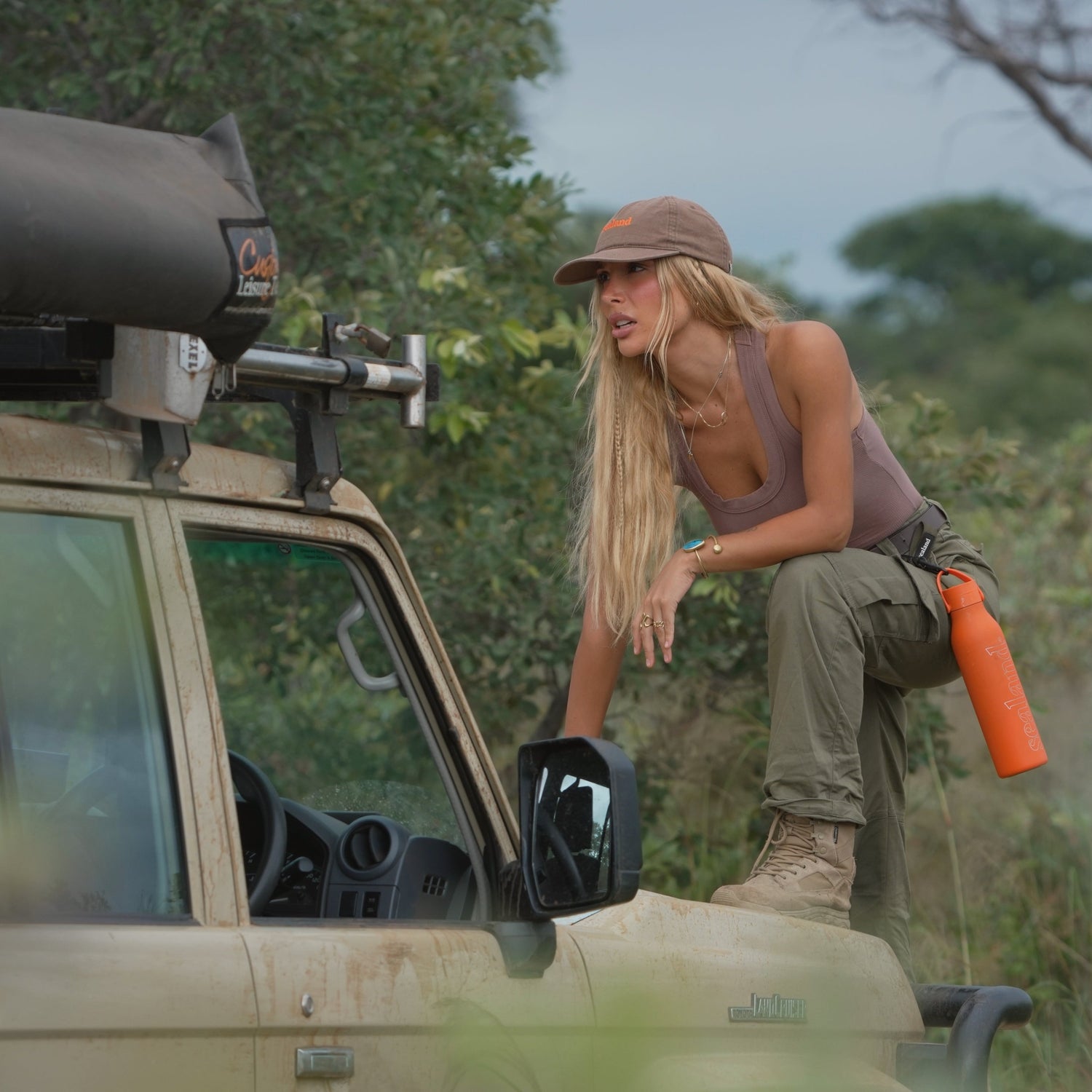
This trip was a collaboration between Dazmental, a professional wildlife filmmaker and conservation storyteller, and Nicky Ecker, a Chilean-Brazilian conservationist who made her name in marine conservation with a focus on sharks, and is now expanding her work into Africa. Two people, one 4x4, full camping setup, and roughly 6,000 kilometres of road across two weeks and a bit.

What the Trip Was About
The idea was to combine a serious conservation purpose with an ambitious self-drive road trip through Namibia, documenting everything along the way. We worked with real conservation projects on the ground, explored some of the country's most remote and dramatic landscapes, and captured a wide range of content throughout. It was a big, full-on project that kept us moving almost every single day, sometimes spending 12 to 16 hours in the car to cover the ground we needed to cover. Agile, demanding, and very much worth it.
The Legs
Orange River Camp
We drove straight from Cape Town to the Namibian border in one day, stopping at the Groowcery camp right on the Orange River. Simple spot, beautiful location, total quiet. It ended up being our favourite camp of the entire trip, and we stopped there again on the way home. A great way to start and end.

Fish River Canyon
First stop in Namibia. Fish River Canyon is one of the largest canyons in the world, and the landscapes are dramatic in every direction. We planned one day and ended up staying two after a phone went missing early on, one of those road trip moments that throws you, but you just deal with it. We stayed at the Canyon Roadhouse, part of the Gondwana Collection, a really cool property with vintage cars scattered across the desert like they had been there for decades. Great people, great energy.
Windhoek — Urban Camp
An overnight stop in Windhoek at Urban Camp, a modern, safe, and genuinely groovy spot with an interesting tiki-style bar and restaurant. A really nice one-night break before the big push north into the conservation legs of the trip.
Otjiwarongo — CCF and PCRF (First Stay)
This was our base for the first round of conservation fieldwork. We were stationed at the CCF, the Cheetah Conservation Fund, which was founded in 1990 and is widely regarded as the world's leading organisation dedicated to saving the cheetah in the wild. Based just outside Otjiwarongo, known as the Cheetah Capital of the World, the CCF runs a modern research and education centre across 142,000 acres, housing cheetahs that have come out of conflict or trafficking situations, running a sophisticated genetics lab, and operating a model farm that trains local farmers in predator-friendly practices. It is a phenomenal place, and getting to spend time there was genuinely exciting, particularly because we were primarily there to work with the PCRF, and discovering the CCF was a very welcome and inspiring bonus. The two organisations share a partnership, and being exposed to both in one place was something special.
The PCRF, the Pangolin Conservation and Research Foundation, is one of the most forward-thinking pangolin conservation operations in Africa. The PCRF works across research, rewilding, community engagement, and education, all focused on the Temminck's ground pangolin, the only pangolin species in southern Africa, and the most trafficked mammal on Earth. The PCRF has released over 33 pangolins back into the wild, tagged dozens of wild individuals for monitoring, and developed anti-poaching intelligence that has led to the rescue of over 150 pangolins. We also had the opportunity to sit down and interview Kelsey, the founder, directly, which gave us incredible insight into the depth and ambition of what the PCRF is building. A very exciting project that is growing fast.
Our specific mission while at the CCF was to assist the PCRF team in relocating a tagged wild pangolin that had moved into an area close to human activity. The plan was to find it, retrieve it, and move it somewhere quieter and safer for the animal. We headed out at night into the cold, walking up the mountain with the expert team, using telemetry equipment to track the signal through the darkness. Leopard territorial calls echoed in the distance, and fresh leopard tracks were on the main roads. We tracked the pangolin to its location, where Saki, the PCRF's dedicated pangolin tracker, followed the signal to a burrow beneath a large rock where the pangolin had settled in, found a food source, and was clearly very comfortable. We got to the burrow but were not able to retrieve the animal. And honestly, that was okay. It showed us exactly what this work demands: patience, expertise, and the acceptance that there are no guarantees. You go out not knowing whether there will be a result, and you keep going anyway.

Nyae Nyae Conservancy — Pangolin Guardians and the San Trackers
We drove east across Namibia to the Nyae Nyae Conservancy near the Botswana border, where the PCRF runs a key part of its field operations. This was remote territory. Wet, windy, sandy conditions, the kind of environment that requires you to stay on your toes and manage things as they come. The Nyae Nyae Conservancy is the first registered conservancy in Namibia and covers nearly 9,000 square kilometres, bordering Khaudum National Park. It is also home to the Ju/'hoansi San people, one of the oldest surviving cultures in the world.
Here we spent time with the Pangolin Guardians, a PCRF programme that employs San trackers to go out into the field, find pangolin activity, and feed that information back to the conservation team. The San are widely regarded as among the finest trackers on Earth, and their knowledge of this landscape is ancient and deeply embedded in their culture. Interestingly, the San believe that pangolins whistle a song to summon the rains, a cultural reverence that the PCRF has channelled into an active conservation partnership, providing employment and purpose to a community with very limited economic opportunities. Spending time with them and seeing the programme in action was one of the most meaningful stops of the entire trip.
Otjiwarongo — CCF Return and the Anatolian Shepherd Programme
We came back to Otjiwarongo for a second attempt at the pangolin relocation, which was again unsuccessful. But this visit brought another great discovery: the CCF's Anatolian Shepherd programme. These are large livestock guardian dogs that are raised from puppyhood alongside farming communities, bonding with the herd and using their size and bark to deter predators from targeting livestock. When a cheetah looking for an easy meal encounters one of these dogs, it is discouraged and moves on to more natural prey, reducing human-wildlife conflict and removing the incentive for farmers to harm cheetahs. It is a smart, community-centred approach to conservation. We were introduced to the breeding programme and got to meet a litter of Anatolian Shepherd puppies that were just a few days old. A really special moment.

Swakopmund
A welcome change of pace after weeks in remote territory. Swakopmund is a coastal town with strong German colonial architecture, a good food scene, and a lot of history. We spent a day exploring the town and a day out in the dunes with Dayne from Batis Birding Tours, a herpetologist who has spent his life tracking animals in the Namibian desert. We tracked the Peringuey's adder, a small desert snake perfectly adapted to moving across loose sand, and managed to find and document one out in the dunes. A great experience with someone who clearly lives and breathes this world.
Walvis Bay and the Naukluft Drive
The road south from Walvis Bay is one of the most visually striking drives in Namibia; the point where the ocean meets the desert is genuinely surreal. From there, the route cuts inland
through the Namib-Naukluft National Park. The landscape shifts constantly: coastal sand gives way to rocky outcrops, then canyon ridgelines, then winding mountain passes. One of the best drives of the trip.

Sossusvlei and Deadvlei
The dunes at Sossusvlei are big, red, and unlike anything else. We camped inside Sesriem for two nights, giving us early morning access before the crowds arrive. The main event was Deadvlei, a white clay pan ringed by massive red dunes, filled with ancient dead camel thorn trees that have been standing for around 700 years. It does not look real. We trekked in and spent proper time there. The sunsets in this part of Namibia were some of the best of the whole trip, massive open skies going deep orange and red over the desert. Genuinely hard to describe.
Ai-Ais Transfrontier Park and Home
The return south took us through the Ai-Ais/Richtersveld Transfrontier Park, which brought some of the most dramatic mountain and valley landscapes of the entire trip. Jagged ridges, deep valleys, winding roads all the way back down to the Orange River. We stopped again at the Growcery, spent a final night on the river, and then drove back to Cape Town.
Content and Creative
Throughout the trip, we were capturing across a range of formats: stills photography of the landscapes and wildlife, drone footage across the various environments, cinematography-style media for our trip partners, and documentary-style content covering the conservation work. It was a very dynamic, creative project from start to finish, and the variety of environments, light, and experiences gave us a huge amount to work with.

Final Thoughts
This was one of the most ambitious things we have done. 6,000 kilometres, two weeks, almost no days off from driving, working in challenging and remote conditions, and doing real conservation work along the way. It pushed us out of our comfort zones constantly, taught us a huge amount about what it takes to protect wildlife and work in the field, and gave us a deep respect for the people who dedicate their lives to this work. It was uncomfortable at times, unpredictable often, and genuinely unforgettable throughout.